
Can a Cat Hotel in Singapore Give My Cat Medication?
A vet-nurse-trained honest guide for owners of diabetic, hyperthyroid, CKD and post-surgical cats.
The short answer
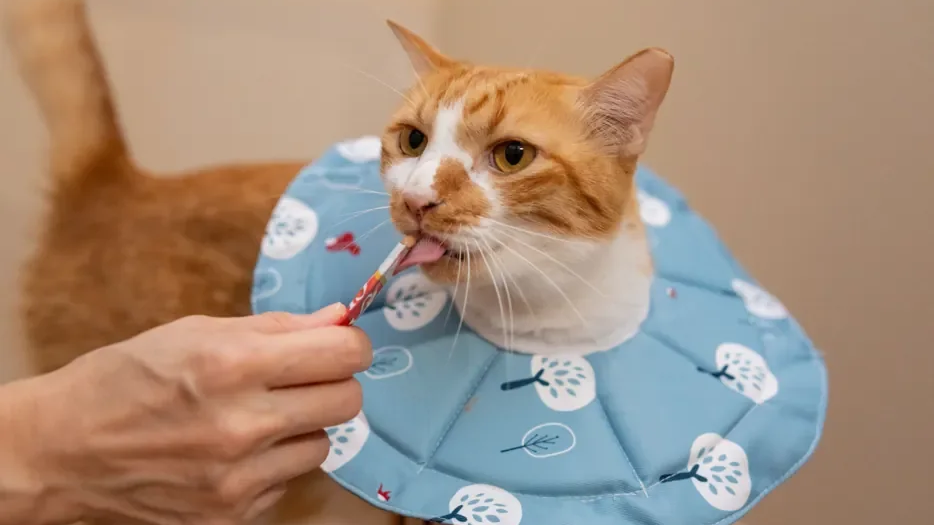
Yes, some cat hotels in Singapore can give your cat medication, but not all of them, so you should always ask before you book. A well-run, AVS-licensed cat hotel with trained staff can typically give oral and transdermal medication, eye and ear drops, insulin and other injections, and subcutaneous fluids, and can keep to a fixed medication schedule around your cat's own vet's instructions. What no boarding facility should do is act as a substitute for a vet: anything that needs urgent veterinary attention should be escalated to a vet straight away. Before booking a cat on medication, confirm who administers it, what training they have, how doses are logged, and what happens in an emergency. At Shangri-Paw, a boutique cat-only hotel in Singapore led by a Fear Free Certified, vet-nurse-trained founder, medication is part of everyday care, including for diabetic, hyperthyroid and post-surgical cats.
Can cat hotels in Singapore legally give medication?
There is no rule that stops a licensed cat boarding facility from administering medication that an owner and their vet have prescribed. What matters is competence, not permission. Giving insulin to a diabetic cat, or subcutaneous fluids to a cat with kidney disease, is a skilled, routine task in veterinary nursing, but it is not something every pet hotel is equipped or trained to do.
That is the real divide in Singapore's cat boarding market. Plenty of facilities will happily feed your cat and clean the room. Far fewer have someone on site who is confident giving an injection, spotting when a diabetic cat is going hypoglycaemic, or noticing the early signs that a post-surgical wound is not healing well. So the honest answer to "can a cat hotel give my cat medication" is: the good ones can, and you need to check.
What types of medication can a cat hotel handle?
A cat hotel with trained staff can typically manage most of the medications your own vet would send home with you:
Oral medication: tablets, capsules and liquids, given by mouth or hidden in food where the drug allows.
Transdermal medication: gels rubbed into the inner ear, common for hyperthyroid cats on methimazole.
Eye and ear drops, and topical treatments for skin or wounds.
Injections, including insulin for diabetic cats, given subcutaneously on a fixed schedule tied to meals.
Subcutaneous (subcut) fluids: fluid given under the skin, the mainstay of managing chronic kidney disease (CKD).
Inhalers with a feline spacer, for asthmatic cats.
Syringe or assisted feeding, for cats who need help eating.
The complexity a facility can safely take on depends entirely on the person doing it. Oral medication is within reach of most trained pet carers. Insulin, injections and subcut fluids require someone genuinely comfortable with a needle and with reading a cat's response, which is why you should ask specifically about these if your cat needs them.
From Shangri-Paw's founder, Kerstin: "I would not call myself a fully qualified vet nurse, because that needs a Certificate IV and skills I do not have. Yet I can confidently give subcutaneous fluids and injections, and I am honest with owners about exactly where that line sits."
That kind of honesty is a good sign. A facility that is precise about what it can and cannot do is safer than one that says yes to everything.
Which medical conditions can a cat hotel manage?
If a cat's condition is stable and their treatment is established, a trained cat hotel can usually care for them. The conditions owners most often ask about, and that experienced facilities regularly manage, include:
Diabetes: insulin on a fixed schedule, with meals timed to match and appetite watched closely.
Hyperthyroidism: oral or transdermal methimazole, twice daily.
Chronic kidney disease (CKD): subcutaneous fluids, a renal diet, and medication as prescribed.
Post-surgery recovery: wound checks, pain relief, antibiotics, and keeping an active cat suitably rested.
Asthma: inhaler support and a low-dust, low-stress environment.
Arthritis and other senior conditions, with pain management and a room set up to reduce strain.
FIV or FeLV positive cats, IBD and allergy diets, and other chronic conditions, with the right hygiene and individual care.
Shangri-Paw regularly boards cats across all of these. The common thread is a stable, vet-established plan that the hotel keeps to precisely, alongside your own vet.
What documentation should you provide?
Good medication care runs on clear instructions.
Before a stay, prepare:
A written medication schedule from your vet, or written clearly by you: drug name, dose, route (oral, injection, subcut), and exact times.
The medication itself, clearly labelled, in enough quantity for the whole stay plus a little spare.
Your cat's vaccination record, and confirmation your cat is free of contagious illness (a standard boarding requirement).
Your vet's contact details, and ideally your written consent for the facility to take your cat there in an emergency.
An emergency contact for you and a backup, in case a decision is needed while you are away.
Notes on your cat's normal behaviour (appetite, litter habits, quirks), so staff can spot when something is off.
The more precise the plan, the safer the stay. A facility that asks you for all of this is one that takes medication seriously.
Questions to ask a cat hotel before booking a cat on medication
Use this checklist on the phone or on your tour. A confident, specific answer to each is what you are looking for:
Who actually administers medication, and what is their training?
Can you give injections and subcutaneous fluids, not just oral medication? (Ask this directly if your cat needs them.)
How do you log each dose, and how will I know it was given?
Have you cared for a cat with my cat's condition before? (diabetes, CKD, hyperthyroid, post-surgery)
What happens if my cat refuses medication, or seems unwell?
Which vet do you use in an emergency, and can you use mine?
Is the facility AVS licensed?
Will my cat be in a private room, or sharing space? (Lower disease risk matters more for a medical or older cat.)
If a facility is vague about who gives the medication or how, treat that as your answer.
When boarding is not the right call
An honest guide has to say this: boarding is not right for every medical cat. If a cat is acutely unwell, unstable, or needs hospital-level or overnight veterinary monitoring, a boarding facility is not the safe choice, and a good one will tell you so rather than take the booking. Look for that willingness to say no. It is one of the clearest signs a facility is putting your cat first.
At Shangri-Paw, if we feel that boarding is not right for a cat, for health or behavioural reasons, we advise the owner accordingly. We have turned bookings away before. Your cat's safety matters more than a night's stay.
How Shangri-Paw handles medication
Shangri-Paw is a boutique, cattery-only cat hotel in Singapore, led by Kerstin, a Fear Free Certified Professional who is vet-nurse trained (Certificate III in Animal Studies and Veterinary Nursing) with years of clinical, rescue and fostering experience. Medication is part of everyday care here, not an exception.
In practice, that means:
Oral, transdermal and subcutaneous medication, insulin and other injections, subcutaneous fluids, inhalers and syringe feeding, all kept to your vet's schedule.
Every dose logged, with updates sent to a dedicated WhatsApp group for your cat. Kerstin is in every group.
Daily monitoring of appetite, litter and behaviour, so subtle changes are caught early rather than missed.
A private room for every guest, never shared, which lowers disease risk for a medical or older cat.
A trained team, briefed on every cat daily, so your cat is in capable hands on every shift.
A working relationship with a vet (Dr. Paws) who can make house calls to the hotel, and prompt escalation to a vet for anything urgent. [confirm named clinics]
Pricing is simple and published: oral or topical medication is $5 per dose, a subcutaneous injection is $10, subcutaneous fluids are $20, and syringe feeding is $10. We give you a clear estimate for your cat's routine before the stay. [confirm rates against live page]
You can read more on our Medical & Post-Vet Cat Boarding page, or for older cats, our Senior Cat Boarding page.
Frequently asked questions
Can a cat hotel in Singapore give my cat insulin? Some can. A cat hotel with trained staff can give insulin injections to a diabetic cat on a fixed schedule, timed to meals, with appetite watched closely. Always confirm the facility has done this before and ask who administers it. Shangri-Paw regularly boards diabetic cats and gives insulin as part of standard care.
Can a cat hotel give subcutaneous fluids for a cat with kidney disease? Yes, at facilities with trained staff. Subcutaneous fluids are the mainstay of managing chronic kidney disease, and a vet-nurse-trained carer can give them to your vet's schedule. At Shangri-Paw, subcutaneous fluids are given by trained hands and charged simply at $20.
How much does it cost to board a cat on medication in Singapore? On top of the room rate, expect a small per-dose charge for medication. At Shangri-Paw, oral or topical medication is $5 per dose, injections $10, and subcutaneous fluids $20, with a clear estimate given before the stay.
What do I need to bring for a cat on medication? Bring the medication clearly labelled with enough for the whole stay, a written schedule with doses and times, your cat's vaccination record, your vet's contact details, and an emergency contact. Notes on your cat's normal appetite and behaviour help staff spot problems early.
Is it safe to board a cat with a chronic illness? For a stable, well-managed condition, yes, provided the facility has trained staff, keeps to your vet's plan, monitors your cat daily and escalates anything urgent to a vet. For an acutely unwell or unstable cat, boarding is not appropriate, and a responsible facility will tell you so.
Do all cat hotels in Singapore give medication? No. Many can feed and clean but are not trained to give injections or manage medical cats. This is exactly why you should ask before booking. Look for an AVS-licensed, cat-only facility with staff trained to give medication and monitor unwell cats.
The bottom line
Yes, a good cat hotel in Singapore can give your cat medication, from a tablet to insulin to subcutaneous fluids, but the quality of that care varies enormously, so the responsibility is on you to ask the right questions.
Look for trained, specific answers, honest limits, a private room, daily monitoring and a clear emergency plan.
Considering boarding for a cat on medication? Book a free private tour of Shangri-Paw, tell us about your cat's condition and vet's plan, and we will tell you honestly whether we are the right fit, and exactly how we would care for them.
About the author
Written by Kerstin,
Founder of Shangri-Paw Cat Hotel.
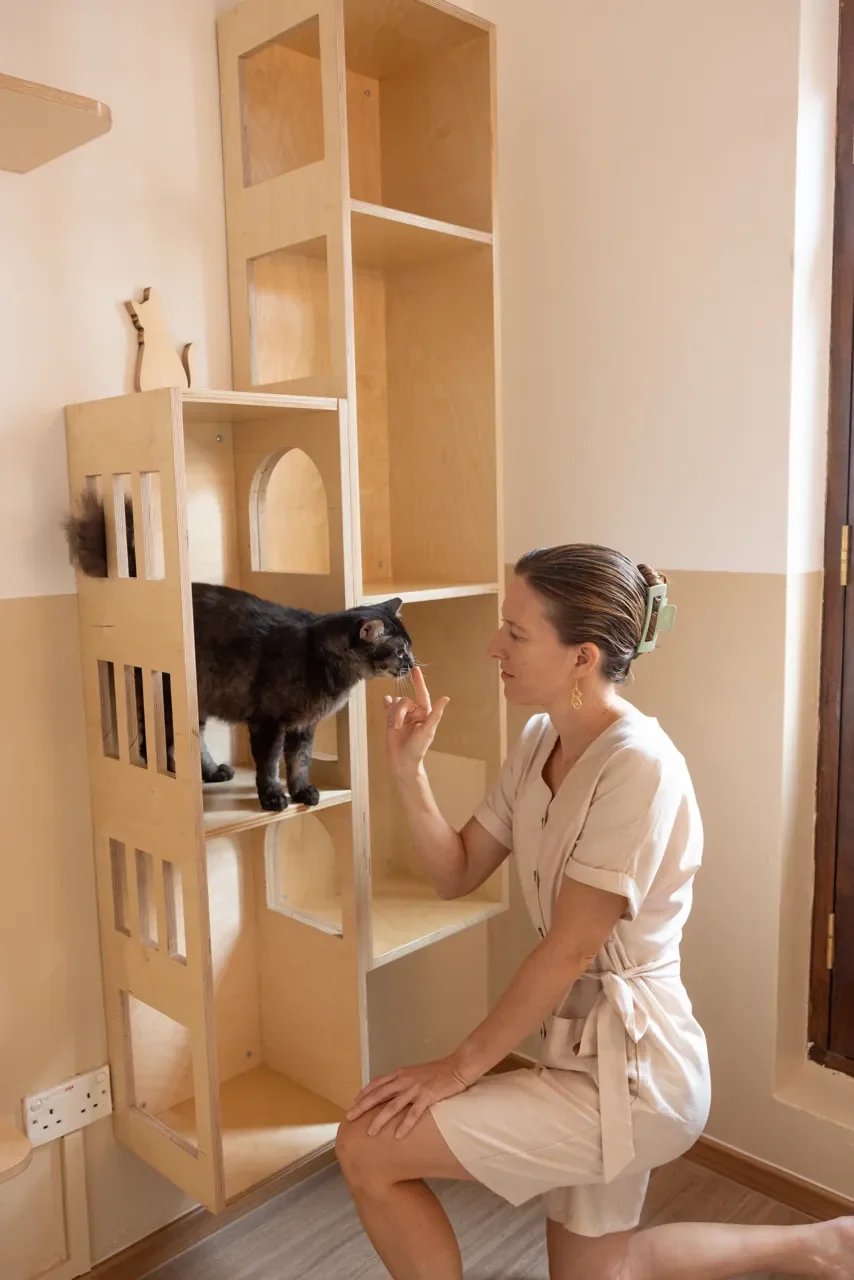
Kerstin is a Fear Free Certified Professional and vet-nurse trained (Certificate III in Animal Studies and Veterinary Nursing, ACVN / UQ Skills), with further study in animal behaviour and years of hands-on clinical, rescue and fostering experience, including senior and medical cats. She is one of only two Fear Free Certified cat hotel owners in Singapore, is at the hotel almost every day, and is in every guest's owner chat.
About Shangri-Paw
Shangri-Paw is a boutique, cat-only hotel in Singapore, built for the cats other places find hardest: the anxious, the senior, the medical and the much-loved. Every guest has a private, catified room, never a cage and never shared, with Fear Free low-stress care, medication and subcutaneous fluids handled by trained hands, and daily photo and video updates so you are never left wondering. Cat-only, honestly run, and planned around how cats
Experience it yourself. Book a private tour, meet Kerstin and the team, and choose the room your cat will stay in.
