
Signs Your Cat Is Stressed in Boarding, and What Is Simply Settling In
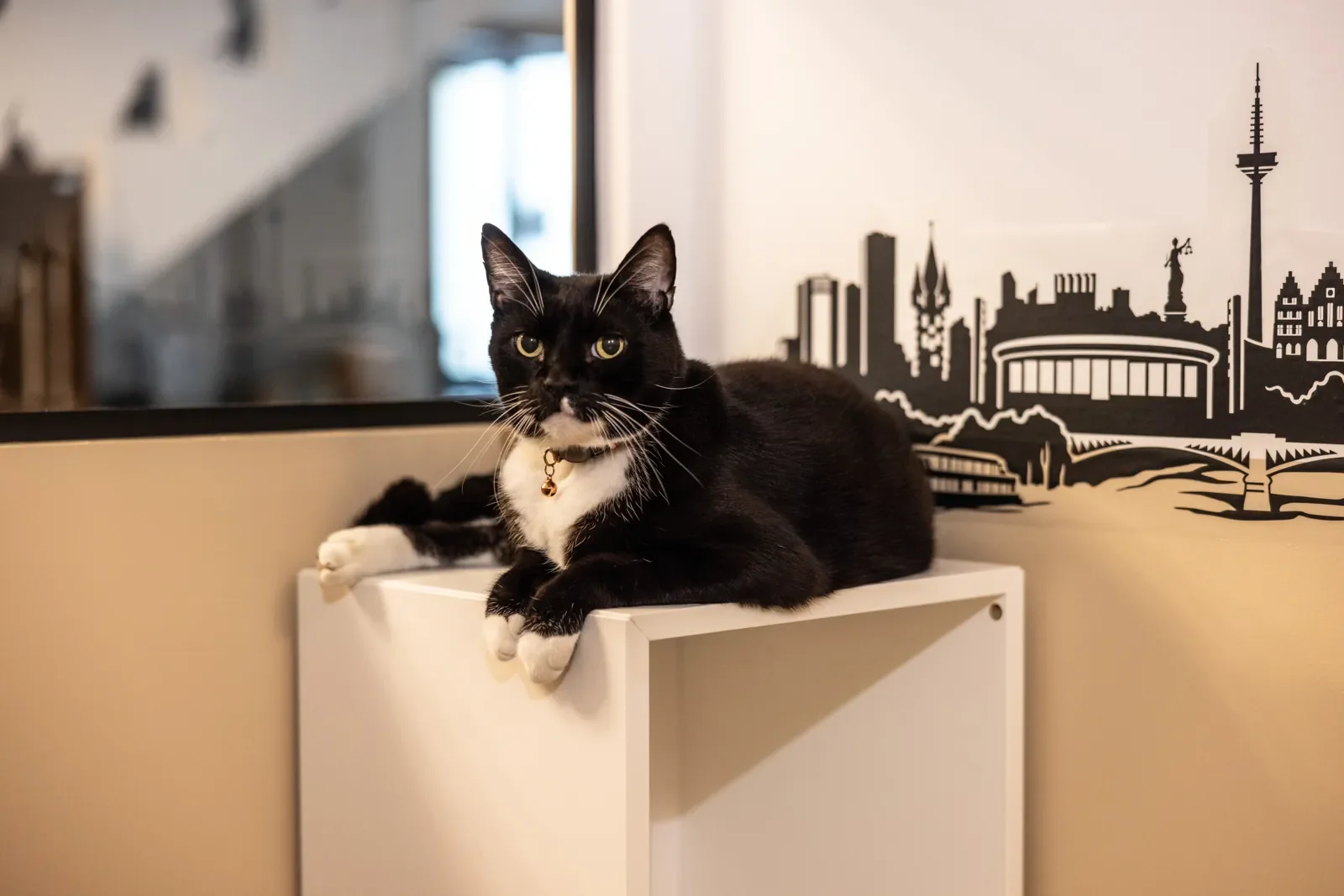
A vet-nurse-trained guide to reading your cat's boarding stay honestly.
The short answer
Most cats show some stress in the first day or two of boarding the first time, and that is normal rather than a warning sign. Hiding, a quiet appetite on day one, and not wanting to be touched are all typical settling behaviour. What signals genuine stress is the pattern continuing: not eating at all past 24 to 36 hours, no urination or defecation for more than a day, constant vocalising, over-grooming to the point of bald patches, aggression that is new for that cat, or a cat who stops moving from one spot entirely. When your cat comes home, hiding for a few hours and sleeping heavily is expected. Hiding for days, refusing food, litter box accidents or persistent flinching are not. The single most useful thing you can do is ask the facility for daily photo and video updates, and tell them what your cat's normal actually looks like before the stay begins.
Why the first two days look worse than they are
Cats are territorial. A new room means a new territory to assess, and assessing it means hiding somewhere defensible and watching until it feels safe. That instinct is the whole reason cats board well once they settle: most are not pining for company, they are waiting to be sure of the space.
So a cat under the shelf on day one is behaving exactly as a healthy cat should. The mistake people make is reading day one as the verdict. It is not. The verdict is day three.
A typical settling curve looks like this:
Day 1. Hides. May not eat much or at all. May not use the litter box while anyone is watching. Often eats overnight when the hotel is quiet.
Day 2. Eats properly. Comes out to investigate, usually when there are no people around. Litter box in use.
Day 3. Watches staff rather than avoiding them. Some cats will approach.
Day 4 onwards. Asks for attention, plays, sleeps in the open, has picked a favourite perch.
Shy cats at home stretch this out. A cat who hides from visitors in their own living room will take longer in a hotel, and that is not a failure of the hotel. And the second stay? In some cases the window shortens, in others it completely disappear and they walk in as if they have never left - the hotel has become their second home.
The signs that actually matter
These are the ones worth acting on, and any good facility should be flagging them to you before you have to ask.
Not eating past 24 to 36 hours. This is the most important one. Cats should not go without food. Prolonged anorexia in cats risks hepatic lipidosis, a serious liver condition, and it happens faster in overweight cats. A facility should be tempting, hand-feeding, offering something more appealing, and telling you if nothing works.
No urine or faeces for more than a day. Cats will sometimes hold on out of stress, but a cat not passing urine at all is an emergency, particularly a male cat. This should never be waiting for you to notice.
Constant vocalising that does not settle. Some cats are simply talkers. A cat who never used to be, calling continuously for hours, is telling you something.
Over-grooming. Bald patches, particularly on the belly or inner legs, or a coat that has gone greasy and unkempt because the cat has stopped grooming altogether. Both directions matter.
Aggression that is out of character. Not a cat who was always grumpy. A cat who has become defensive when they never were.
Complete stillness. The cat who has not moved from the same spot in two days, who does not track movement, whose posture stays crouched and tight. This is more concerning than a cat who hisses, because a hissing cat is still engaging with the world.
Any of the above in combination with a medical history. A stressed diabetic cat who stops eating is a different problem entirely, and needs a facility that understands why.
What a good cat hotel does about it
Spotting stress is the easy part. What matters is what happens next, and this is where facilities differ enormously.
At Shangri-Paw, an unsettled cat gets time rather than pressure. That means no cages, no forced interaction, and no reaching in to pull a cat out for a photo. If a cat wants to stay hidden, we sit quietly in the room and let them take in our scent on their own terms, sometimes for days. Calming music runs through the hotel, and we will add Feliway or pheromone litter for cats who need it. Nobody on shift wears perfume.
From Shangri-Paw's founder, Kerstin: "We never make a cat come out or be petted. For a shy cat, we will simply sit quietly in the corner and let them take in our scent, with zero pressure."
Practical adjustments matter too: moving a nervous cat to a quieter room, covering part of the glass so they have somewhere to feel unseen, changing feeding times to the small hours when the hotel is silent, or offering their food warmed.
And the honest part: if a cat is genuinely not coping, a responsible facility tells you rather than riding it out. We have advised owners against boarding before. Your cat's welfare is worth more to us than a completed booking.
What you should be able to see for yourself
You should not have to take anyone's word for how your cat is doing.
Ask for daily photo and video updates as standard, not on request. A photo of a cat eating, a video of a cat moving around the room, and a picture of a used litter box tell you more than any amount of reassurance. At Shangri-Paw you are added to a WhatsApp group for your cat and the first days come with a deliberately excessive volume of updates, litter box photos included. Kerstin is in every group.
CCTV is available for every stay! Our four Luxury Suites include CCTV you can log into and watch any time. For Comfort and Deluxe rooms, rental CCTV access is a $6 a night add-on, and you are always welcome to bring your own pet camera and set it up on our wifi - completely free of charge.
The other thing that helps enormously is something only you can provide: a description of your cat's normal. How much they usually eat, where they hide at home, whether they are a talker, how they react to strangers. Staff cannot spot a change from normal if nobody has told them what normal is.
Cat behaviour after boarding: what is normal at home
The days after pickup worry people almost as much as the stay itself.
Expected, and not a problem:
Hiding for a few hours, occasionally a day.
Sleeping heavily. Cats sleep lightly in an unfamiliar place and catch up at home.
Being clingy, or conversely giving you the cold shoulder for an evening.
Eating more than usual for a day or two.
Hissing at another cat in the household who now smells unfamiliar. Reintroduce slowly rather than forcing it.
Worth watching, and worth a vet call if it persists past 48 to 72 hours:
Still hiding and refusing food.
Urinating outside the litter box, straining, or blood in the urine.
Diarrhoea or vomiting that continues.
Flinching from touch, or hiding whenever you approach.
Any new lameness, wound, or weight loss you were not told about.
A stay should never come back with a surprise. If your cat lost weight or had an incident, you should have heard about it during the stay, not discovered it afterwards.
A fun fact: Some owners believe cats don’t want to come home as they are not getting the most enthusiastic greeting when they pick them up (oh no, it’s carrier time) or they seem to “punish” their owners when they come back. Trust is they are happy to see you, just need a little time to adjust back!
Frequently asked questions
How do I know if my cat is stressed at a boarding facility? Look at the pattern rather than the first day. Hiding, a quiet appetite and avoiding people on day one is normal settling behaviour. Genuine stress shows as not eating past 24 to 36 hours, no urination or defecation for over a day, constant vocalising, over-grooming or bald patches, out-of-character aggression, or a cat who does not move from one spot at all. Ask for daily photo and video updates so you can judge for yourself.
What are signs my cat had a bad boarding experience? Coming home and hiding for more than a day, refusing food, flinching when you approach, litter box accidents, or weight loss you were not told about. The clearest sign is information you did not receive: a good facility tells you about incidents during the stay, not after it. Sleeping heavily and being briefly aloof are normal and not causes for concern.
Why is my cat hiding after boarding? Because home has to be reassessed as territory too, and because they are catching up on proper sleep. A few hours to a day of hiding is normal. If your cat is still hiding and not eating after 48 to 72 hours, call your vet.
How long does it take a cat to settle into boarding? Two to four days for most cats. Eating usually returns overnight on day one or during day two, followed by exploring, then seeking attention. Cats who are shy at home take longer, sometimes a week, and that is normal rather than a warning sign.
Is boarding traumatic for cats? For most cats, no. Cats are territorial, so a private, quiet room with a predictable routine is something they adapt to well. What causes real stress is a noisy or shared environment, forced handling, and inconsistent care. A cat-only facility with private rooms and Fear Free handling avoids most of it.
My cat stopped eating in boarding. Is that serious? Past 24 to 36 hours, yes. Cats should not go without food, and prolonged anorexia risks hepatic lipidosis, a serious liver condition that develops faster in overweight cats. A facility should be actively tempting your cat to eat and contacting you well before that point.
The bottom line
Some stress in the first day or two of boarding is normal, and any facility promising you a cat who is delighted from the first hour is not being straight with you. What matters is the trajectory, whether the facility notices, and whether they tell you. Ask for daily updates, tell them what your cat's normal looks like, and judge the stay on day three rather than day one.
Worried about how your cat would cope? Come and see the rooms, tell us about your cat, and we will tell you honestly whether we think boarding is right for them.
About the author
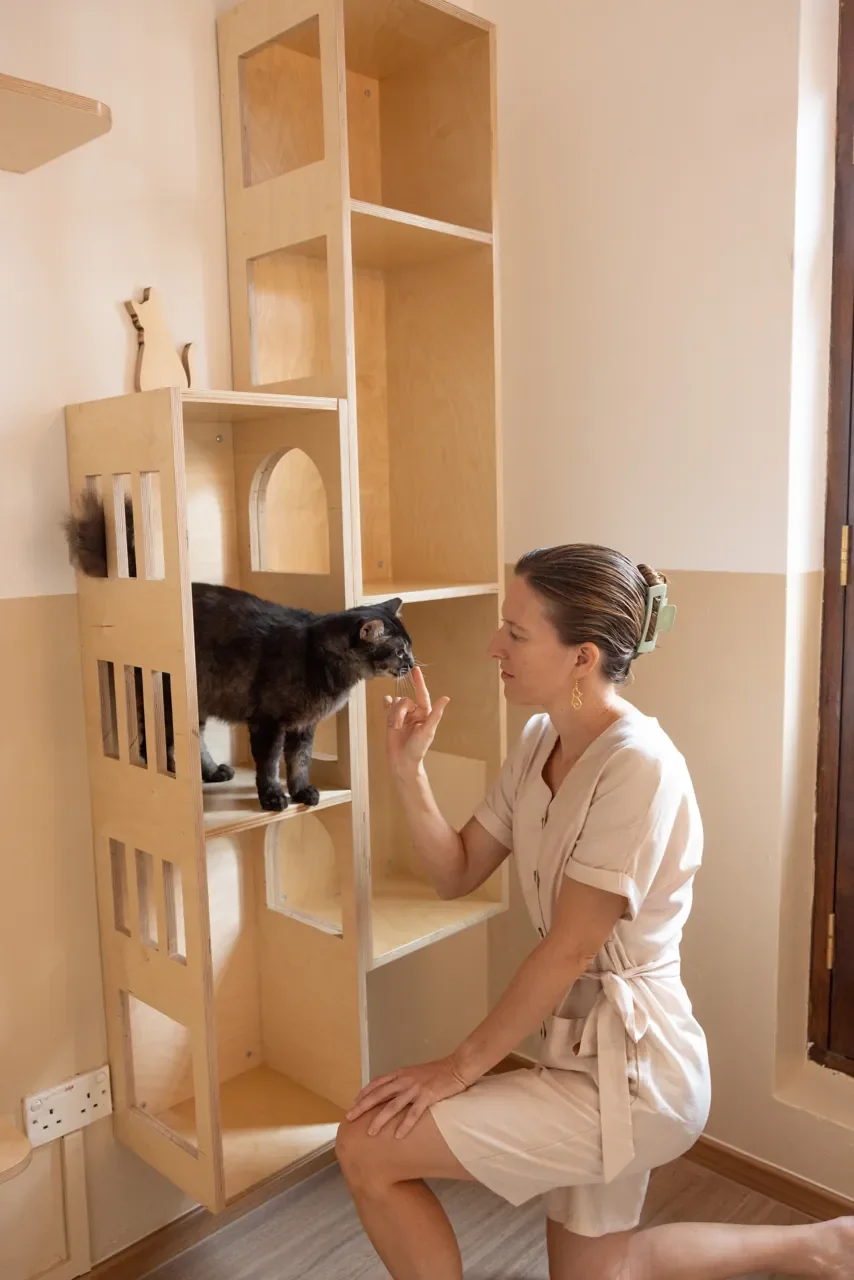
Written by Kerstin,
Founder of Shangri-Paw Cat Hotel.
Kerstin is a Fear Free Certified Professional and vet-nurse trained (Certificate III in Animal Studies and Veterinary Nursing, ACVN / UQ Skills), with further study in animal behaviour and years of hands-on clinical, rescue and fostering experience, including senior and medical cats. She is one of only two Fear Free Certified cat hotel owners in Singapore, is at the hotel almost every day, and is in every guest's owner chat.
About Shangri-Paw
Shangri-Paw is a boutique, cat-only hotel in Singapore, built for the cats other places find hardest: the anxious, the senior, the medical and the much-loved. Every guest has a private, catified room, never a cage and never shared, with Fear Free low-stress care, medication and subcutaneous fluids handled by trained hands, and daily photo and video updates so you are never left wondering. Cat-only, honestly run, and planned around how cats
Experience it yourself. Book a private tour, meet Kerstin and the team, and choose the room your cat will stay in.
